Introduction: Why a Shared Lighting Vocabulary Matters
One person says “make it brighter,” another hears “open the iris,” and the programmer cranks intensity while the LD wanted a tighter beam edge. Cue the arguing. And the wasted rehearsal time. And the crew silently judging everyone.
Stage lighting is technical, fast, and usually happening while three other departments are asking for favors. So a shared vocabulary isn’t “nice to have.” It’s how you stop avoidable mistakes in design meetings, patch sheets, focus calls, and on-site installs—especially when you’re mixing theatre habits with concert habits, or old-school electricians with network-savvy programmers.
This glossary is for designers, techs, integrators, and buyers who don’t want guesswork in specs, plots, or procurement. Words mean things. Let’s keep them sharp.
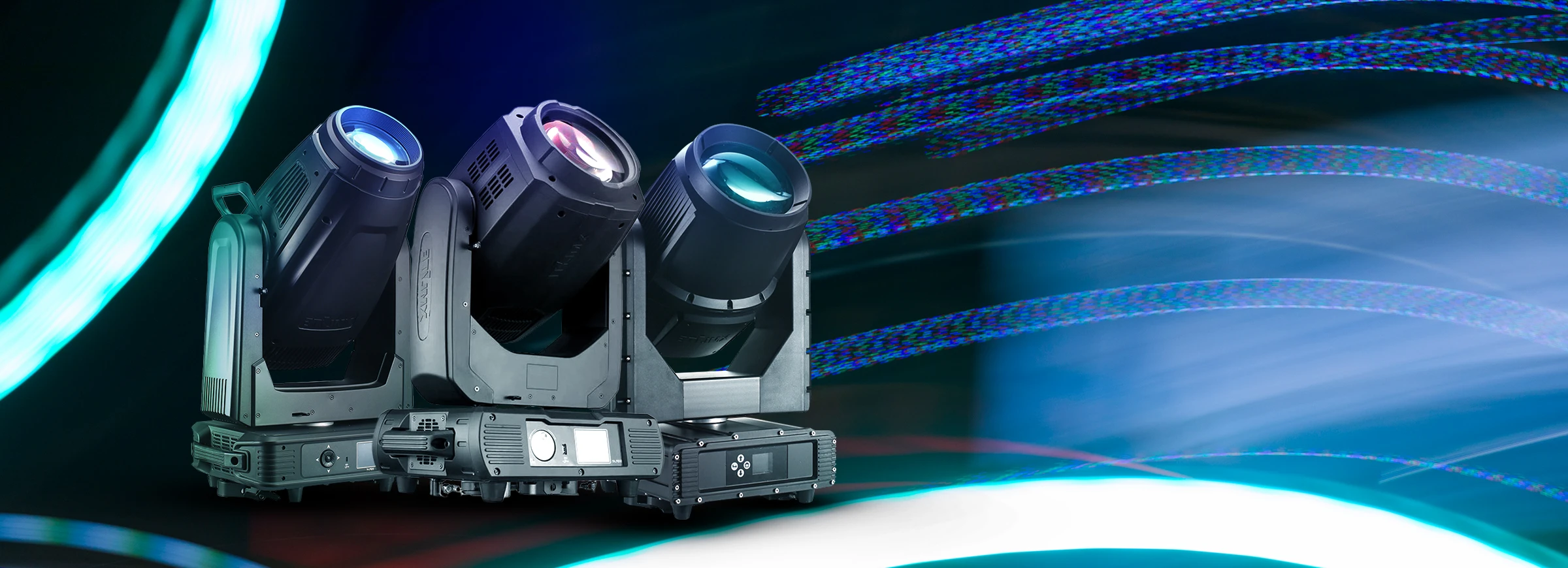
Core Lighting Design & Fixture Terminology
Fundamental Lighting Concepts
- Intensity — How much light output you’re sending (often as a percentage in the console). Not the same as “brightness,” which is what humans feel.
- Color — The spectral makeup of the light (and how it interacts with skin, costumes, paint, camera sensors, and smoke).
- Direction — Where the light is coming from relative to the subject. Direction is what makes faces readable… or haunted.
- Beam angle — The angle where the beam drops to 50% of peak intensity. This is the “usable punch” zone.
- Field angle — The wider angle where the beam drops to 10%. This is the softer spill that hits scenery you didn’t mean to light.
- Focus — Adjusting the lens system so the beam edge is sharper or softer (fixture-dependent). Focus is not “aim.”
Common Fixture-Related Terms
- Wash — A broad, even spread meant to cover areas smoothly (stage, cyc, set). Think coverage first, texture second.
- Spot — A fixture built for controlled framing, pattern projection, and tighter optics. In moving lights, “spot” often means gobos + focus + zoom + effects.
- Beam — A narrow, high-intensity shaft designed to read in haze. Beam fixtures care about aerial presence more than pretty edges.
- Static fixture — No pan/tilt motors. You aim it by hand (pipe, yoke, clamp, ladder—pick your poison).
- Moving fixture (moving head) — Motorized pan/tilt. Great when the plot changes every song, every scene, or every client mood swing.
Theatre and Stage Lighting Language
- Front light — Light from downstage/front positions. Makes faces readable. Also flattens people when abused.
- Back light — Light from upstage positions hitting shoulders/hair. Adds separation. Saves boring looks.
- Side light — Light from booms or wings. Makes dancers look like dancers (muscle, shape, motion).
- Key light — The main “motivated” source on a subject (the one that sells the story).
- Fill light — The softer support that controls shadow density without turning everything into a glow stick.
- Accent light — Targeted emphasis: a prop, a doorway, a logo, a drum riser, a soloist’s moment.
Control, Power, and Programming Terms
Lighting Control Terminology
- DMX512 — The classic control protocol. Still everywhere because it’s simple, predictable, and works when your Wi‑Fi is crying.
- RDM (Remote Device Management) — DMX’s grown-up sidekick: bi-directional communication for discovery, addressing, status, and basic management. If you’re speccing pro gear and never mentioning RDM, you’re leaving competence on the table.
- Universe — A block of 512 DMX addresses. Large rigs burn universes fast—especially with multi-parameter movers.
- Channel — A single controllable parameter (dimmer, pan, tilt, gobo, etc.). Consoles may map many DMX addresses into one “fixture” with lots of channels.
- Addressing — Setting the start address so the console knows where the fixture lives in the DMX universe.
- Cue — A recorded state (or transition) triggered in sequence. Theatre lives on cues.
- Scene / Look — A lighting state, often used more casually in live events.
- Preset / Palette — Stored building blocks (positions, colors, beam settings) that speed programming and keep shows consistent.
Networking and Signal Distribution
- Art-Net — DMX over Ethernet, widely supported, easy to deploy, and often used in mixed-brand systems.
- sACN (E1.31) — A modern streaming DMX protocol designed for scalable distribution. Common in large installs and network-first rigs.
- Node — Converts Ethernet (Art-Net/sACN) to DMX outputs (or the reverse). Your bridge between network world and DMX world.
- Splitter / Opto-splitter — Electrically isolates and distributes DMX lines to protect against faults and reduce signal problems.
- Termination — A resistor at the end of a DMX run to reduce reflections. Not glamorous. Still fixes real headaches.
- Data integrity — The boring phrase that explains why cheap cable, bad grounding, and sloppy runs ruin your night.
Power and Electrical Terms
- Voltage (V) — Electrical “pressure.”
- Current (A) — Electrical flow. Often what trips breakers when someone ignores inrush.
- Power (W) — Real consumption. What you actually pay for (and what makes heat).
- Power factor (PF) — How efficiently the device uses power from the supply. Low PF can mean more current draw than you expected for the watts.
- Inrush current — The startup surge (especially relevant with LED drivers and movers). This is why “it worked in the shop” can die on a loaded distro.
- PDU / Distro — Power Distribution Unit. Breakers, metering, connectors, and sanity.
- Safety ratings — The paperwork and engineering behind not burning a venue down: electrical compliance, grounding practices, and environmental ratings like IP.
Performance, Optical, and Technical Specifications
Optical and Output Measurements
- Lumen (lm) — Total light output (roughly). Useful, but not the whole story because optics matter.
- Lux (lx) — Illuminance on a surface (lumens per square meter). This is what you measure on stage marks.
- Candela (cd) — Intensity in a direction. Beam fixtures love candela because it predicts aerial punch.
- CCT (Correlated Color Temperature, Kelvin) — “Warm vs cool” white, like 3200K tungsten-ish vs 5600K daylight-ish.
- Color consistency (SDCM / MacAdam steps) — How tightly units match each other. If you’ve ever seen one “white” that looks mint-green next to another, you’ve met this problem.
Color Quality and Control
- CRI — Color Rendering Index. A rough indicator of how naturally colors appear under the source. Helpful, not perfect.
- TLCI — TV Lighting Consistency Index. Often more relevant than CRI when cameras are the customer.
- CMY mixing — Cyan/Magenta/Yellow subtractive mixing (common in profile/spot movers). Great for smooth fades and saturated looks.
- RGB / RGBW / RGBA — Additive LED mixing. Powerful, but “nice white” depends on emitter choices and calibration.
- Color wheel — Fixed filters on a wheel. Fast, repeatable, and still common in beam/spot fixtures.
- CTO (Color Temperature Orange) — Warms the beam toward tungsten looks. If your “white” feels icy on faces, CTO is the fix.
Mechanical and Environmental Terms
- Pan / Tilt — The two axes of movement. Pan is left-right rotation; tilt is up-down. (Your crew will still argue about it at least once.)
- Zoom — Changing beam angle through optics. Zoom is not dimming.
- Frost — Softens the beam edge and reduces hot spots; turns “beam-y” into “wash-y.”
- Gobo — A pattern (metal or glass) projected through the optics. Used for texture, breakup, logos, and pretending the set has depth.
- Iris — Mechanical aperture that reduces beam diameter without changing focus.
- Prism — Splits the beam into multiple beams for aerial effects.
- Noise level — Fan and motor noise. If you’re doing theatre, quiet matters more than marketing claims.
- Cooling system — Fans, heat sinks, heat pipes. Heat management affects output stability and lifespan.
- IP rating — Dust/water protection. If you’re outdoors, “sort of protected” is just another way to say “it will fail.”
Professional Fixture Categories & Industry Usage (XMLITE Focus)
Moving Head Lighting Terminology
- Moving head wash — Built for coverage: softer edges, wide zoom ranges, smooth color. Used for base looks and big stage layers.
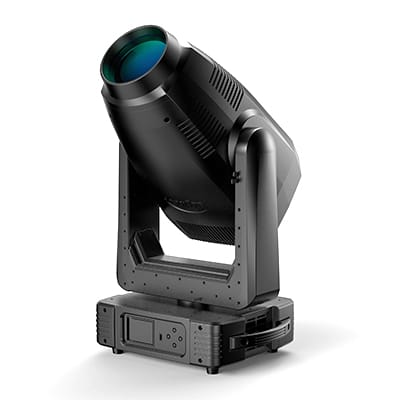
- Moving head profile — Built for control: framing, gobos, focus, tighter optics. Example of the category: XMLITE’s 800W Profile moving head light (C8) is specced with CMY mixing, zoom, and pro-style feature sets like RDM/USB support—exactly the kind of language integrators expect to see in a real quote packet.
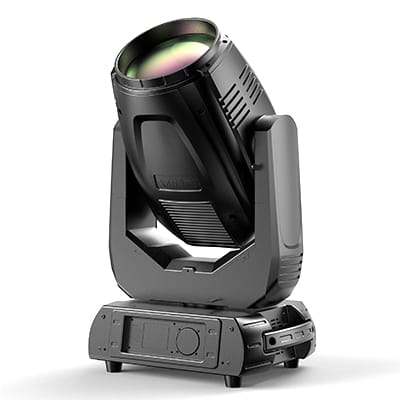
Moving head beam — Built to cut through haze with narrow optics and high intensity. A clean example is the 450W Beam Moving Head Light (LLP450), which is described as beam-focused and lists pan/tilt ranges, channel modes, and RDM support—terms that matter when you’re patching fast and touring hard.
Laser and Advanced Effect Fixture Terms
- Laser beam (stage use) — A coherent beam source used for aerial effects. This is not “just another bright moving head.” It carries safety rules, audience scanning limits, and venue policies.
- Laser hybrid — Fixtures that combine laser-like aerial looks with conventional lamp/LED effects. Buyers like the versatility; crews like not hauling two fixtures to get one look.
- Use-case-driven terminology — TV and livestream gigs care about flicker behavior, color rendering, and fan noise. Live concerts care about aerial readability, fast movement, and effect stacks that don’t look cheap.
XMLITE’s Role in Professional Lighting Systems
Manufacturers don’t just ship metal and glass—they quietly train the industry by the words they put in spec sheets, manuals, and UI labels. XMLITE positions itself as a stage lighting manufacturer with a long production footprint (founded in 2010, large-scale factory capacity, global distribution claims), which is exactly why consistent naming matters: it reduces the translation errors between designer intent, integrator paperwork, and what arrives in the truck.
If you want a concrete example of “spec language that signals intent,” look at a fixture like the 1400W Moving Head Profile Spot: you’ll see terms like CRI, zoom range, framing/cut system, and channel counts—stuff that tells a programmer and a buyer the same story, without a sales call.
Conclusion: A Living Vocabulary for a Fast-Moving Industry
Lighting tech changes. The job doesn’t: make pictures, hit marks, stay safe, don’t waste time. A shared vocabulary keeps the creative conversation from getting derailed by sloppy wording, and it keeps procurement from buying the wrong tool because two departments used the same word to mean different things.
Good manufacturers help by naming features clearly. Good crews help by refusing to be vague.
FAQ
What are the most common lighting terms used in theatre?
Front light, back light, side light, key/fill, cue, focus, gel/color, dimmer, shutter, and “hold please” (the most used phrase of all).
What is the difference between wash, spot, and beam lighting?
Wash is coverage. Spot/profile is control (gobos, framing, focus). Beam is narrow intensity for aerial looks that read in haze.
What is a moving head light in lighting terminology?
A motorized fixture that pans and tilts under console control. It can be a wash, a spot/profile, a beam, or a hybrid—category matters.
What is a moving head light in lighting terminology?
Same core idea, different buyer angle: it’s a fixture defined by pan/tilt plus a channel map, so you spec it by modes, addressing, and control protocol support.
What do pan and tilt mean in moving lights?
Pan is the horizontal rotation (left-right). Tilt is the vertical rotation (up-down). And yes, people still swap them when they’re stressed.